
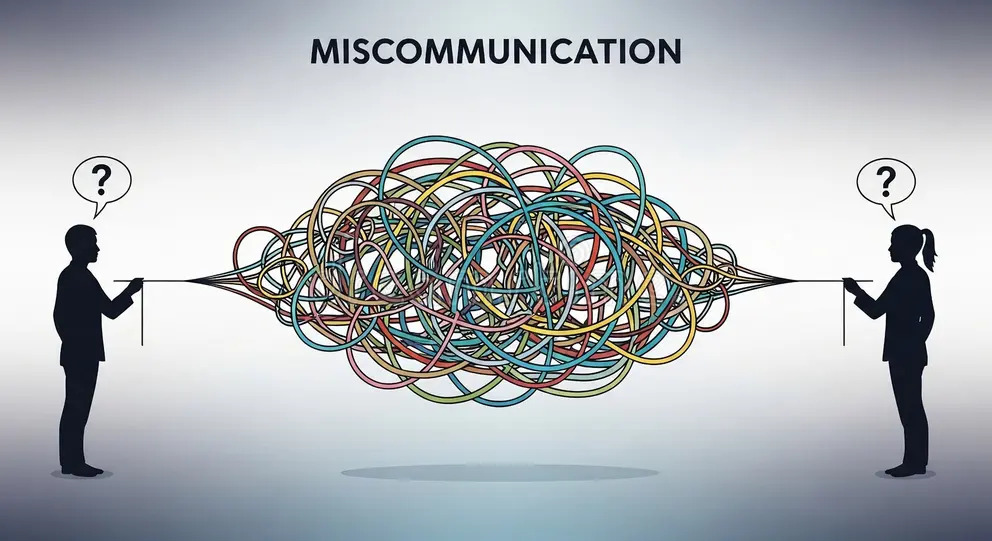
Earlier this summer, I started reading the new book Digital Body Language by Erica Dhawan. It is a good read, and I recommend it to you. Later in the summer, I went to a national Public Works conference in Houston, (PWX) and had a personal experience that made me even more interested in the book.
There was a group from Minnesota, and we had a fun happy hour at a local restaurant. Then a group of us walked to the Astros/White Sox game. We had a blast, or so I thought. The next morning, one of the guys who was there, an influential leader I am just building a relationship with texted me:
Him: 2:11 pm Tom, it was hard to see you last night.
Me: 2:17 pm (feeling a bit shocked) Tell me more…
Me: 2:27 pm (now genuinely concerned) …preferably in person…
Then 6 hours of silence. My first instinct was not “Oh he didn’t mean that.” It was “Oh, what did I do wrong?”
Me: 7:47 pm (still thinking about it) Or did you mean ‘good to see you’?
Him: 8:35 pm Sorry I meant it was ‘good to see you’ Lol
I was not LOL at that moment. In the end he called and cleared things up. He had sent a voice-activated text that turned “good” into “hard”. He apologized and we laughed about it.
And yet look what happened. A text, which is supposed to be so efficient, took more than 6 hours to achieve its goal!
We love the speed of texts and emails, but both regularly do not live up to their expected efficiency. And at times, especially in the world of public works, engineering and construction, a misinterpreted text or email can be costly and/or very dangerous.
Digital communication should be so easy. We all speak English. How can it become so troublesome?
Well for one thing, we know that over 90% of our communication happens via body language and tone of voice. Less than 10% is the actual words. Yet actual words are over 90% of digital communication. The script has flipped.
What can we do about that fact? Actually, a lot. There are ways to improve our digital “body language.” Establishing norms, agreeing on expectations related to timing, are two of them.
Another thing is to acknowledge both personal and generational differences in communication. Some people (especially our younger professionals) consider the thumbs up emoji to be passive aggressive. Two of them? Sarcasm or insincerity. Yikes!
How many mistakes and interpersonal tensions are happening via digital miscommunication? Dhawan says that 50% of the tone in all emails is misleading. That translates into potential loss of trust and organizational inefficiency. And also, safety issues.
The digital world moves dangerously fast. One solution is just to slow down. Not even a full New York minute. Take 5 more seconds to read the text you just wrote. Take 10 more seconds to understand the email you just read before replying. The texting world is a game of seconds.
If this interests you, please join our next training course in Mounds View, Minnesota on Thursday, Oct 29th. We will be growing our digital communication skills and also getting better at in-person challenges like crucial conversations and giving/receiving feedback.
Here is a flyer with more info, and a link to register and pay. You need not have completed Level I to register. But you do need to be supervising at least one other person and consider yourself a pretty good “in-person” communicator.
It will not be “hard” for me to see you in Mounds View on Oct 29th 2026!