
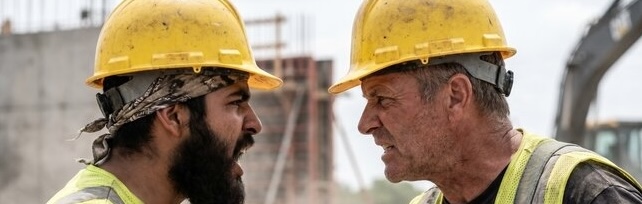
There’s a version of the world that some people in construction still think we’re in.
A place where raising your voice got results. Where PPE was optional. Where toughness mattered more than communication. Where women and people from diverse cultures were treated as less than, and mental health was ignored.
But whether we like it or not, that’s the world we don’t live in anymore. It is the “Old School” world.
There are many things I like about that “Old School” world. I like the work ethic, the no-nonsense approach, and the willingness to suffer for the mission.
But today, many things have changed. You can’t lead by yelling, and safety actually is a priority now. The workforce is more diverse. Priorities around time off, family, and flexibility have shifted.
You don’t have to agree with it. But you do have to operate within it.
And we can’t afford to lose any workers who are more “New School” in attitudes and expectations.
Culture isn’t separate from performance. It drives it. And the way we communicate matters.
And nowhere is that more visible than in safety. Today, safety is under a microscope. Tracking records and “near misses” matter, and companies can lose multi-million-dollar contracts over poor safety performance.
Yet, many teams are still trying to meet modern safety expectations with old-school leadership habits. And that’s where things break down.
Because the hardest part of safety today isn’t technical. It’s human.
It’s whether someone feels comfortable speaking up when something’s off, whether a new worker asks a question instead of guessing, and whether a high performer is held accountable for cutting corners or excused because “they get results.”
You can still be direct. You can still hold high standards. You can still demand performance.
But your behavior has to reflect the world we’re actually operating in.
The crews, leaders, and companies that understand this shift and adapt how they lead are the ones building stronger, safer, and more successful operations because of it.
So as summer ramps up and workloads increase, pay attention to the safety culture you’re creating.
This is when incidents spike.
So ask yourself:
What kind of environment are you building, and would your crew speak up if it mattered most?